
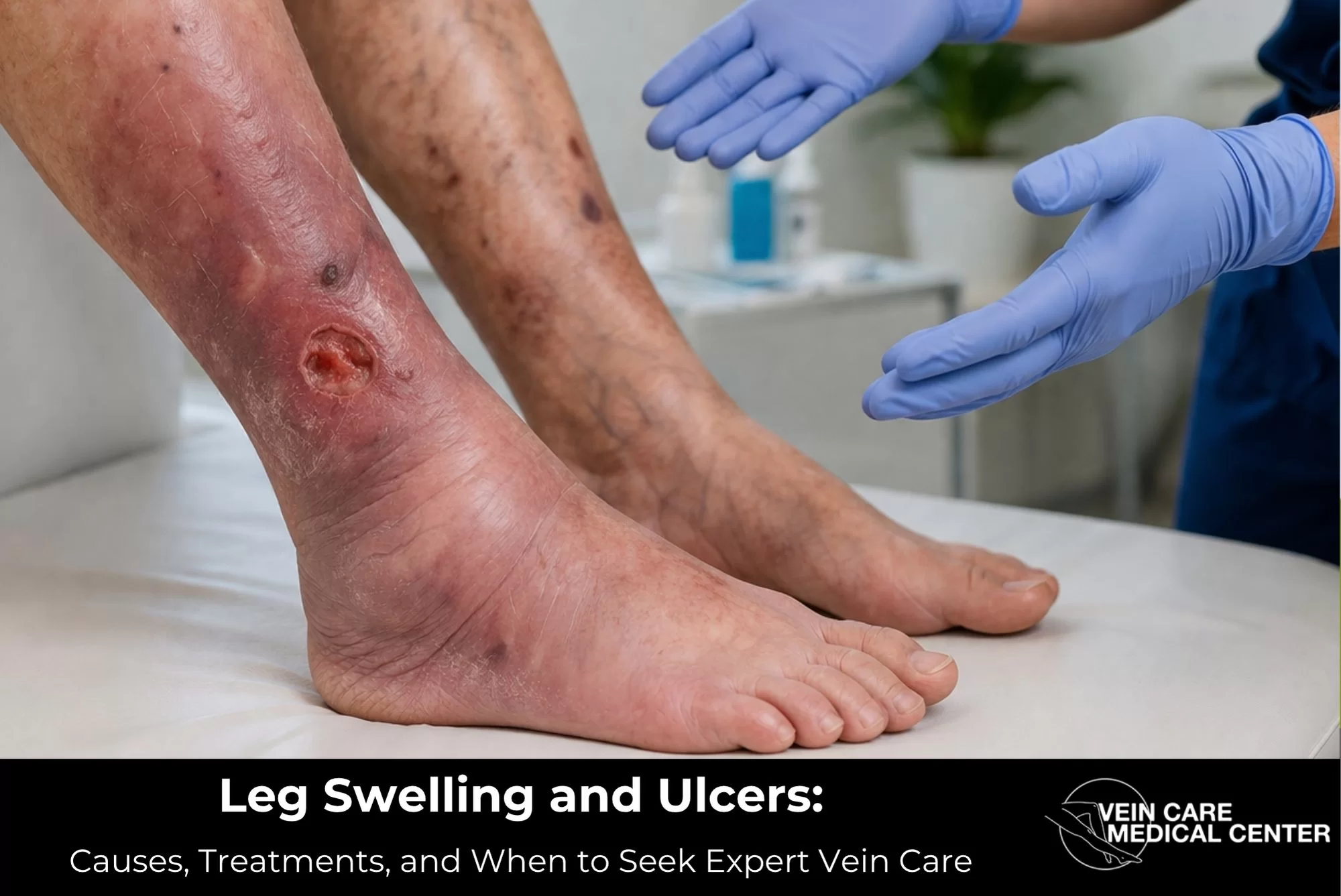
Leg swelling and ulcers are more than just uncomfortable—they can be warning signs of underlying vascular conditions that require professional attention. At Vein Care Medical Center, we specialize in diagnosing and treating vein-related issues to help patients regain comfort, mobility, and long-term health.
If you’re experiencing persistent swelling, skin changes, or slow-healing wounds on your legs, understanding the root cause is the first step toward effective treatment.
What Is Leg Swelling?
Leg swelling, also known as edema, occurs when excess fluid accumulates in the tissues of the lower extremities. It can affect one or both legs and may range from mild puffiness to severe swelling that limits mobility.
Common Symptoms of Leg Swelling:
- Tight or stretched skin
- Indentation after pressing (pitting edema)
- Heaviness or aching in the legs
- Reduced flexibility in the ankle or knee
- Skin discoloration
What Are Leg Ulcers?
Leg ulcers are open sores or wounds that typically develop on the lower legs or ankles and do not heal properly. These ulcers are often linked to poor circulation, especially in individuals with vein disease.
Signs of a Leg Ulcer:
- Open wound that persists for weeks
- Red, inflamed, or hardened skin around the wound
- Drainage or crusting
- Pain or tenderness
- Darkened or discolored skin
The Connection Between Vein Disease, Swelling, and Ulcers
One of the most common causes of both leg swelling and ulcers is chronic venous insufficiency (CVI). This condition occurs when the veins in the legs struggle to send blood back to the heart.
When blood pools in the veins:
- Pressure builds up
- Fluid leaks into surrounding tissues
- Skin becomes damaged over time
- Ulcers may develop
Without proper treatment, symptoms can worsen and lead to complications.
Common Causes of Leg Swelling and Ulcers
1. Chronic Venous Insufficiency (CVI)
The leading cause of venous ulcers and persistent swelling.
2. Varicose Veins
Damaged veins can lead to poor circulation and fluid buildup.
3. Deep Vein Thrombosis (DVT)
A blood clot in the leg can cause sudden swelling and requires immediate medical care.
4. Lymphedema
A blockage in the lymphatic system causes fluid retention and swelling.
5. Diabetes
Poor circulation and nerve damage increase the risk of ulcers.
6. Prolonged Sitting or Standing
Reduced movement can impair circulation and lead to swelling.
Risk Factors You Shouldn’t Ignore
- Aging
- Obesity
- Pregnancy
- Family history of vein disease
- Sedentary lifestyle
- Smoking
If you fall into one or more of these categories, proactive vein care is essential.
Advanced Treatment Options at Vein Care Medical Center
At Vein Care Medical Center, we offer state-of-the-art, minimally invasive treatments designed to address the root cause—not just the symptoms.
Our Treatment Options Include:
- Endovenous Laser Therapy (EVLT)
A minimally invasive procedure that closes faulty veins using laser energy. - Sclerotherapy
A solution is injected into affected veins to collapse and fade them. - Compression Therapy
Medical-grade compression stockings improve circulation and reduce swelling. - Wound Care for Leg Ulcers
Specialized treatment plans to promote healing and prevent recurrence. - Lifestyle & Preventative Care
Customized guidance on diet, movement, and daily habits.
When Should You See a Vein Specialist?
Seek medical attention if you experience:
- Persistent leg swelling
- Skin discoloration or thickening
- Open sores that don’t heal
- Pain or heaviness in the legs
- Visible varicose veins
Early intervention can prevent serious complications and improve quality of life.
How to Prevent Leg Swelling and Ulcers
While some conditions require medical treatment, you can reduce your risk with simple daily habits:
- Elevate your legs regularly
- Stay physically active
- Avoid prolonged sitting or standing
- Maintain a healthy weight
- Wear compression stockings if recommended
- Stay hydrated
Frequently Asked Questions (Q&A)
Q1: Is leg swelling always a sign of a serious condition?
Not always, but persistent or worsening swelling can indicate vein disease or other medical issues and should be evaluated by a specialist.
Q2: Can leg ulcers heal on their own?
Some minor ulcers may improve, but most require medical treatment—especially if caused by poor circulation.
Q3: Are vein treatments painful?
Most modern vein treatments are minimally invasive and involve little to no discomfort, with quick recovery times.
Q4: How long does it take for a leg ulcer to heal?
Healing time varies depending on severity and underlying cause, but proper treatment significantly speeds up recovery.
Q5: Can compression stockings really help?
Yes, they improve blood flow, reduce swelling, and are often a key part of treatment and prevention.
Q6: What happens if vein disease is left untreated?
It can lead to worsening swelling, skin damage, ulcers, and increased risk of infection.
Q7: Is treatment covered by insurance?
Many vein treatments are covered when deemed medically necessary. Our team can help verify your coverage.
Contact Vein Care Medical Center
Take the first step toward healthier legs and lasting relief.
Website:
veincaremedicalcenter.com
Request an Appointment:
https://veincaremedicalcenter.com/appointments/
Los Angeles Office
📞 Phone: (323) 934-9191
📧 Email: veincare.medicalcenter@gmail.com
📍 Address:
6221 Wilshire Boulevard, Suite 612
Los Angeles, California 90048
Walnut Office
📞 Phone: (323) 934-9191
📧 Email: veincare.medicalcenter@gmail.com
📍 Address:
18710 Amar Rd., Suite A
Walnut, California 91789


