
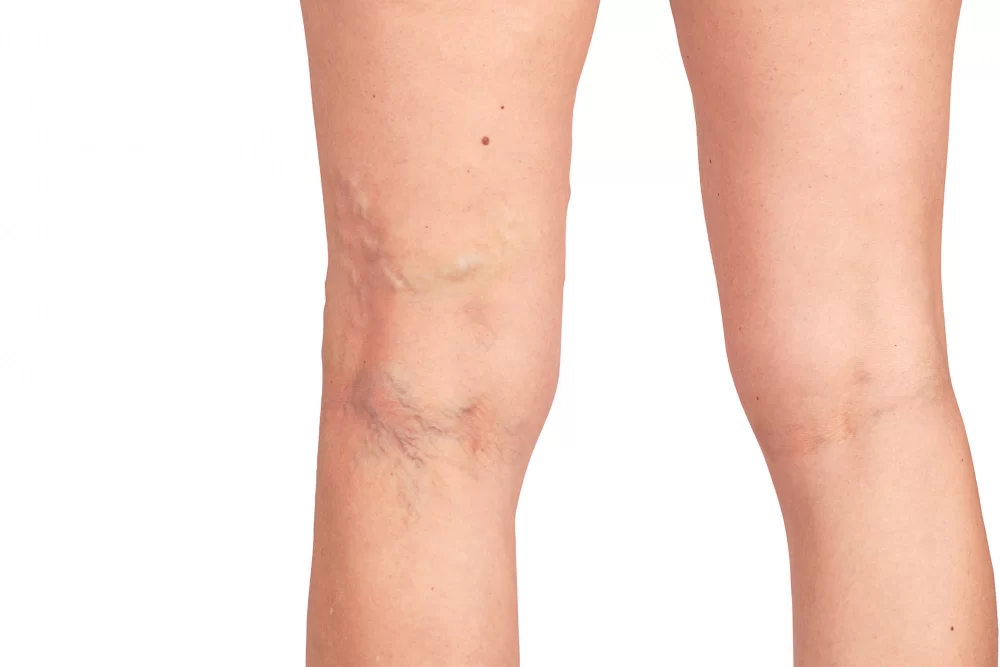
Sclerotherapy in Los Angeles & Walnut
Sclerotherapy is a highly effective, non-surgical treatment for varicose veins and spider veins that uses a precisely targeted injectable solution to close unwanted vessels. At Vein Care Medical Center in Los Angeles & Walnut, Dr. Michael D. Landau performs sclerotherapy for both medically necessary and cosmetic vein concerns — without the use of hypertonic saline (“salt water”), instead utilizing FDA-approved sclerosants (Sotradecol® or Asclera®) under direct vision or ultrasound guidance. The result is a safer, more comfortable, and more effective treatment experience.
Request an AppointmentHow Sclerotherapy Works
Sclerotherapy involves injecting an FDA-approved chemical sclerosant into the targeted vein. The sclerosant damages the inner lining of the vessel wall at the injection site, triggering a process called sclerosis — hardening and closure of the vein. In most cases, Dr. Landau foams the sclerosant (Sotradecol® or Asclera®) before injection, a technique known as foam sclerotherapy. Foamed sclerosant is particularly effective because it displaces blood from the vessel and maintains sustained contact with the vein wall, improving closure rates for larger and more tortuous vessels.
Once the vein is successfully closed, your body gradually absorbs it over the following weeks to months. The treated vessel fades and eventually disappears, leaving clearer, smoother-looking skin.
What Sclerotherapy Treats
Dr. Landau uses sclerotherapy to treat:
- Varicose veins — including those medically necessary to treat due to venous insufficiency
- Spider veins and telangiectasia — small red or purple surface vessels
- Reticular veins — blue-green feeder veins beneath the skin
- Unsightly veins — anywhere on the body, including hands, torso, and face
- Veins associated with ankle discoloration and superficial venous disease
Sclerotherapy can be used as a standalone treatment or as part of a comprehensive vein care plan following EVLA or Radiofrequency Ablation to address residual surface veins.
Foam Sclerotherapy vs. Liquid Sclerotherapy
Liquid sclerotherapy is used primarily for small spider veins and telangiectasia. Foam sclerotherapy — where the sclerosant is agitated to create microfoam — is more effective for larger reticular veins and varicose veins because the foam physically displaces blood within the vessel, allowing the sclerosant to act directly on the vein wall with maximum effectiveness. Dr. Landau selects the appropriate formulation based on the type and size of vein being treated.
What to Expect During and After Sclerotherapy
Sclerotherapy at Vein Care Medical Center is performed in-office with no anesthesia required. Dr. Landau uses a very fine needle to deliver the sclerosant directly into the target vein. Most patients experience only a brief, mild stinging or burning sensation at each injection site — often compared to a mosquito bite — lasting no more than a minute or so.
Multiple veins can be treated in a single session. After treatment, compression stockings should be worn as directed by Dr. Landau. You can walk and resume most normal activities immediately. Treated veins begin to fade over the following weeks, with full results visible at three to six months.
Schedule Your Sclerotherapy Consultation
If varicose or spider veins are affecting your comfort or confidence, call (323) 934-9191 to schedule a consultation with Dr. Landau at Vein Care Medical Center. We serve patients throughout Los Angeles & Walnut and the greater Los Angeles area from two convenient office locations.
Sclerotherapy — Frequently Asked Questions
What is foam sclerotherapy and why does Vein Care Medical Center use it instead of hypertonic saline?
Foam sclerotherapy uses an FDA-approved detergent sclerosant (Sotradecol® or Asclera®) that has been agitated into a foam consistency before injection. The foam displaces blood from the vein and maintains full contact with the vessel wall, leading to more effective and reliable closure compared to liquid formulations — and significantly better results than hypertonic saline, which is more painful, carries a higher risk of skin staining, and has a lower efficacy profile. Dr. Landau does not use hypertonic saline for any sclerotherapy procedures at Vein Care Medical Center.
How many sclerotherapy treatments will I need?
Most patients require one to four sessions depending on the number and size of veins being treated. Spider veins and small reticular veins often show significant improvement after one or two sessions. More extensive varicose vein networks may require additional treatments. Dr. Landau will give you a realistic estimate at your consultation.
How long does it take to see results from sclerotherapy?
Smaller spider veins typically begin fading within three to six weeks of treatment. Larger veins may take two to three months to show significant improvement, with final results visible at three to six months. Some temporary darkening or bruising along the treated vein is normal and resolves as the body absorbs the closed vessel.
Can sclerotherapy be used for varicose veins or only spider veins?
Sclerotherapy is effective for both varicose veins and spider veins. For larger varicose veins caused by venous insufficiency, Dr. Landau may recommend addressing the underlying reflux with EVLA or RFA first, followed by sclerotherapy for any remaining surface vessels. For smaller varicose veins without significant underlying insufficiency, sclerotherapy alone may be sufficient.
Is sclerotherapy covered by insurance?
Sclerotherapy performed for medically necessary varicose vein treatment — particularly when venous insufficiency is documented — is often covered by insurance, including Medicare. Cosmetic sclerotherapy for spider veins without associated medical symptoms is typically not covered. Vein Care Medical Center can help determine your coverage and discuss financing options for cosmetic treatments.
Are there any side effects of sclerotherapy?
Common, temporary side effects include mild bruising, redness, or slight swelling at injection sites. Some patients notice temporary hyperpigmentation (darkening) along the treated vein as it is absorbed, which generally fades over several months. Serious complications are rare when sclerotherapy is performed by an experienced specialist like Dr. Landau using appropriate agents and techniques.
Can I exercise after sclerotherapy?
Walking is encouraged immediately after sclerotherapy to promote circulation. However, strenuous exercise, hot baths, saunas, and direct sun exposure on treated areas should be avoided for several days following treatment as directed by Dr. Landau. Compression stockings should be worn as instructed to support healing and optimize results.