
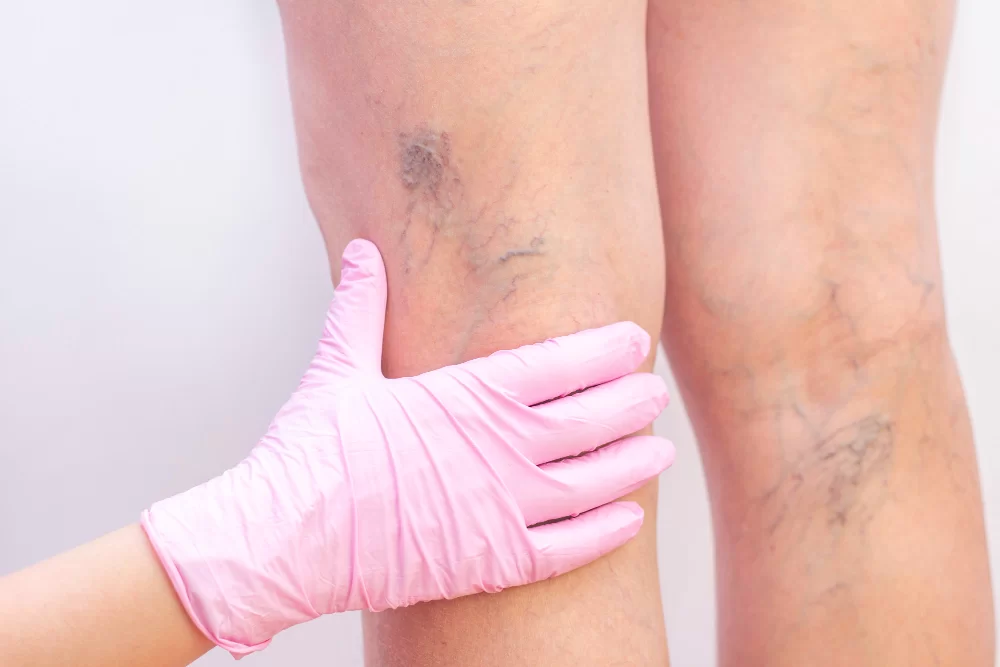
Spider Veins (Telangiectasia) in Los Angeles & Walnut
Spider veins — medically referred to as telangiectasia — are small, dilated blood vessels that appear close to the surface of the skin, forming visible red, purple, or blue thread-like patterns. They most commonly appear on the legs, face, cheeks, and nose, and are among the most frequently treated vascular concerns at Vein Care Medical Center in Los Angeles & Walnut. While spider veins are generally benign, they can occasionally signal an underlying condition that warrants a closer look. Dr. Michael D. Landau provides expert evaluation and a full range of proven, minimally invasive spider vein treatments to help you achieve clearer, healthier-looking skin.
Request an AppointmentWhat Are Telangiectasia?
Telangiectasia refers to a condition where tiny blood vessels (broken capillaries) become permanently widened and visible through the skin. The result is a web-like or branching pattern of thin red or purple lines — hence the common name “spider veins.” A closely related condition, venulectasia, involves small blue vessels and is also commonly grouped under the spider vein umbrella.
Spider veins are distinct from varicose veins, which are larger, rope-like vessels that bulge above the skin surface and are more likely to cause physical symptoms. However, spider veins sometimes develop as a downstream consequence of the same elevated venous pressure that produces varicose veins — particularly when venous insufficiency is present.
What Causes Spider Veins?
The exact cause of telangiectasia is not fully understood, but research and clinical experience point to a combination of genetic predisposition and environmental factors. The most widely accepted contributing factors include:
- Genetics and family history — spider veins tend to run in families
- Sun damage — chronic ultraviolet exposure is strongly associated with facial telangiectasia
- Chronic heat or cold exposure
- Hormonal changes — pregnancy, birth control pills, and hormone therapy can trigger or worsen spider veins
- Prolonged standing or sitting
- Underlying venous insufficiency — when present, elevated venous pressure drives the formation of surface vessels
Spider veins can be worsened by skin irritation from abrasive sponges, soaps, or harsh topical products. While the condition is benign in most individuals, it may occasionally be a symptom of a more serious underlying issue — which is why evaluation by a specialist like Dr. Landau is recommended.
Spider Vein Treatment at Vein Care Medical Center
Dr. Landau offers two primary approaches for spider vein treatment, often used in combination for the best outcomes:
Sclerotherapy and Direct Vision Sclerotherapy — Injectable treatment using FDA-approved sclerosants (Sotradecol® or Asclera®) delivered directly into the spider veins. The veins collapse and are gradually absorbed by the body. Sclerotherapy is considered the gold standard for leg spider veins and reticular veins.
Excel V™ Laser and Excel V™ Technology — The Cutera® Excel V™ laser targets and coagulates superficial vessels using high-powered green laser energy, making it particularly effective for very fine facial telangiectasia and small red vessels that are too small for needle injection.
Dr. Landau will recommend the most appropriate treatment — or a combination — based on the type, size, and location of your spider veins.
Can Spider Veins Be Prevented?
While there is no guaranteed way to prevent spider veins entirely, several measures can reduce their severity and slow their development: wearing compression stockings, maintaining a healthy weight, staying physically active, avoiding prolonged periods of standing or sitting, and protecting sun-exposed skin. Regular evaluation by Dr. Landau helps identify and address contributing venous disease before spider veins worsen.
Schedule Your Spider Vein Consultation
If you are bothered by spider veins on your legs or face, call (323) 934-9191 to schedule a consultation with Dr. Landau at Vein Care Medical Center. We serve patients throughout Los Angeles & Walnut and the surrounding areas from our Los Angeles and Walnut offices.
Spider Veins — Frequently Asked Questions
What is the difference between spider veins and varicose veins?
Spider veins (telangiectasia) are tiny, superficial blood vessels visible through the skin as fine red, purple, or blue lines. They are generally flat or barely raised. Varicose veins are larger, bulging vessels that protrude above the skin surface and are more commonly associated with symptoms like pain, heaviness, and swelling. Both can develop from underlying venous insufficiency, but they differ significantly in size, depth, and associated health implications.
Are spider veins dangerous?
Spider veins are benign in most cases and do not pose a direct health risk. However, they can occasionally be a sign of underlying venous insufficiency, which if left untreated may progress to more serious conditions such as varicose veins, leg swelling, skin changes, or venous ulcers. Dr. Landau recommends a vascular evaluation to rule out any underlying conditions, even if your spider veins are primarily a cosmetic concern.
What is the best treatment for spider veins?
For leg spider veins, sclerotherapy — particularly foam sclerotherapy using FDA-approved agents — is considered the gold standard. For very fine facial spider veins or rosacea-related telangiectasia, the Excel V™ laser is highly effective. Many patients benefit from a combination of both approaches. Dr. Landau will evaluate your veins and recommend the optimal treatment at your consultation.
How many treatments are needed to remove spider veins?
The number of sessions depends on the extent of your spider veins. Many patients see significant clearing after one to three sclerotherapy or laser sessions. Dr. Landau will give you a personalized estimate based on your specific vein pattern and the treatment approach he recommends.
Will spider veins come back after treatment?
Treated spider veins that are successfully closed will not return. However, new spider veins can develop in other areas over time, particularly if underlying risk factors such as venous insufficiency or genetic predisposition are present. Periodic follow-up treatments may be recommended to maintain results.
Is spider vein treatment covered by insurance?
Treatment of spider veins is typically considered cosmetic and is generally not covered by insurance. However, if spider veins are associated with symptomatic venous insufficiency, coverage may be available for the underlying condition. Vein Care Medical Center can help clarify your coverage and discuss affordable payment options including CareCredit financing.
Can sun exposure make spider veins worse?
Yes — chronic sun exposure is one of the most well-established contributing factors to facial telangiectasia. UV radiation can weaken the walls of small blood vessels, causing them to dilate and become permanently visible. Daily sunscreen use and protective clothing are recommended as part of an ongoing management strategy for patients prone to spider veins.