
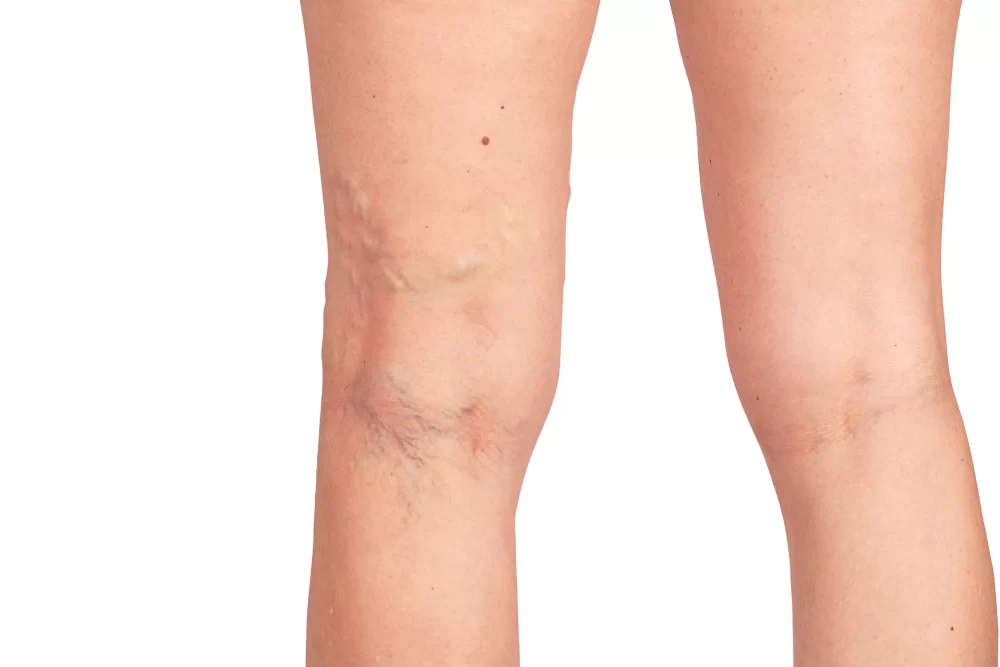
If you’ve been diagnosed with varicose veins and told you need treatment, you’ve probably encountered a long list of acronyms and brand names: EVLA, RFA, VenaSeal™, Varithena™, ClariVein®. What’s the difference? Which one is right for you? This guide breaks down each treatment offered at Vein Care Medical Center so you can walk into your consultation informed and prepared.
Why Are There So Many Options?
Different vein conditions respond best to different treatment approaches. The location of the diseased vein, its size, the degree of reflux, your overall health, and even patient preference all factor into treatment selection. A skilled vein specialist like Dr. Michael D. Landau will evaluate your anatomy with duplex ultrasound before recommending the most appropriate procedure — or a combination of procedures — for your specific situation.
All of the procedures described below share one important quality: they are minimally invasive, performed in-office, and require no general anesthesia or hospitalization.
Endovenous Laser Ablation (EVLA)
EVLA is widely considered the gold standard for treating large-diameter trunk veins, particularly the great saphenous vein (GSV) and small saphenous vein (SSV). A thin optical fiber is inserted into the diseased vein through a small entry point in the skin. The fiber delivers laser energy along the length of the vein, generating heat that causes the vein wall to collapse and seal shut. Blood is naturally rerouted to healthy veins.
At Vein Care Medical Center, Dr. Landau uses the CoolTouch® CTEV laser system, which incorporates precision cooling to maximize patient comfort. The procedure takes less than one hour, requires no hospitalization, and produces no scarring. Success rates exceed 95%.
Best for: Large varicose veins caused by saphenous vein reflux.
Radiofrequency Ablation (RFA) — VenClose™
RFA uses a catheter that delivers radiofrequency energy (heat) to the vein wall rather than laser energy. The heat contracts collagen within the vein walls, causing collapse and permanent closure. Vein Care Medical Center specifically uses VenClose™, which treats the vein in precisely controlled 10 cm or 2.5 cm segments for consistent, uniform results.
Unlike laser therapies, VenClose™ eliminates the need for continuous catheter pullback, which promotes a more controlled ablation process. The procedure is performed under local tumescent anesthesia and takes less than one hour. Patients return to normal activities the same day.
Best for: Trunk vein ablation; patients who prefer non-laser thermal treatment.
VenaSeal™
VenaSeal™ takes a fundamentally different approach: instead of heat, a small amount of medical-grade cyanoacrylate adhesive (a specialized surgical glue) is delivered into the vein via catheter, physically sealing it shut. The body’s natural processes then cause the sealed vein to harden and gradually be absorbed.
Because VenaSeal™ uses no heat, there is no risk of thermal nerve damage or skin burns — a concern with laser and RFA procedures near certain anatomical areas. It also requires no tumescent anesthesia (only a local anesthetic at the catheter entry point), no post-procedure compression stockings, and no pain medication. Patients are back to normal activities immediately.
VenaSeal™ is FDA-approved for symptomatic varicose veins of the saphenous system.
Best for: Patients who want to avoid heat-based procedures, particularly those with certain anatomical presentations or lifestyle preferences.
Varithena™
Varithena® (polidocanol injectable foam) is the only FDA-approved foam treatment specifically indicated for the great saphenous vein system and its accessory veins. A small amount of microfoam is injected into the diseased vein either through a catheter or by direct injection. The foam fills the vein, damages the endothelium (vein wall lining), and causes the vein to collapse. Once collapsed, the foam deactivates and blood is redirected to healthy veins.
Varithena® can treat veins above and below the knee, including tortuous or previously treated segments that may not be accessible to thermal ablation. The procedure takes under an hour, requires no incisions, and patients can resume some activity the same day.
Recovery note: Bandages should remain dry and in place for 48 hours, compression stockings worn on the treated leg for four weeks, and heavy exercise avoided for one week.
Best for: GSV system disease, including tortuous veins or previously treated segments.
ClariVein® (Mechanochemical Ablation – MOCA)
ClariVein® combines two distinct mechanisms in a single device: mechanical disruption of the vein wall using a rotating catheter tip, and simultaneous delivery of a liquid sclerosing agent. This dual-action approach — mechanochemical ablation (MOCA) — achieves high occlusion rates (approximately 90%) without any heat at all.
Because no heat is used, no tumescent anesthesia is required. The entry point is minimal, and only local anesthetic at the insertion site is needed. The procedure typically takes just 30 minutes and produces minimal to no bruising or discomfort. ClariVein®’s catheter tip is two to three times thinner than traditional laser and RFA devices, which contributes to its gentle profile.
Best for: Patients who want to avoid both heat-based and adhesive-based treatments; also an excellent choice when tumescent anesthesia is undesirable.
Sclerotherapy and Direct Vision Sclerotherapy
Both procedures involve injecting an FDA-approved sclerosant solution (Sotradecol® or Asclera® in foam form) directly into visible veins using a fine needle. The sclerosant irritates the vein wall, causing it to scar and collapse. Over the following weeks, the treated vein is absorbed by the body.
Direct Vision Sclerotherapy is performed under direct visual guidance for reticular veins and spider veins. Ultrasound-guided sclerotherapy is used for deeper or less visible veins. Neither procedure requires anesthesia, and most patients report minimal discomfort — comparable to a mild mosquito bite.
Sclerotherapy is typically used as the primary treatment for spider veins and small varicose veins, and is often used as a complementary treatment after EVLA or RFA to address residual surface veins.
Best for: Spider veins, small varicose veins, and surface veins following ablation of trunk veins.
How to Choose the Right Treatment
The right choice depends on many factors, and Dr. Landau will guide you through that decision-making process at your initial consultation. Duplex ultrasound mapping of your venous anatomy is essential — it reveals which veins are refluxing, how severe the reflux is, and which approach will produce the best result.
The American College of Phlebology and the American Venous Forum both publish guidelines supporting endovenous thermal ablation as a first-line treatment for saphenous vein reflux — and multiple randomized controlled trials confirm long-term efficacy rates above 90% for EVLA and RFA.
If you’re in the Los Angeles or Walnut area and ready to explore your options, call Vein Care Medical Center at (323) 934-9191 or request an appointment online. Dr. Landau will help you understand exactly what’s happening in your veins and which treatment approach is best suited to your anatomy, symptoms, and lifestyle.


