
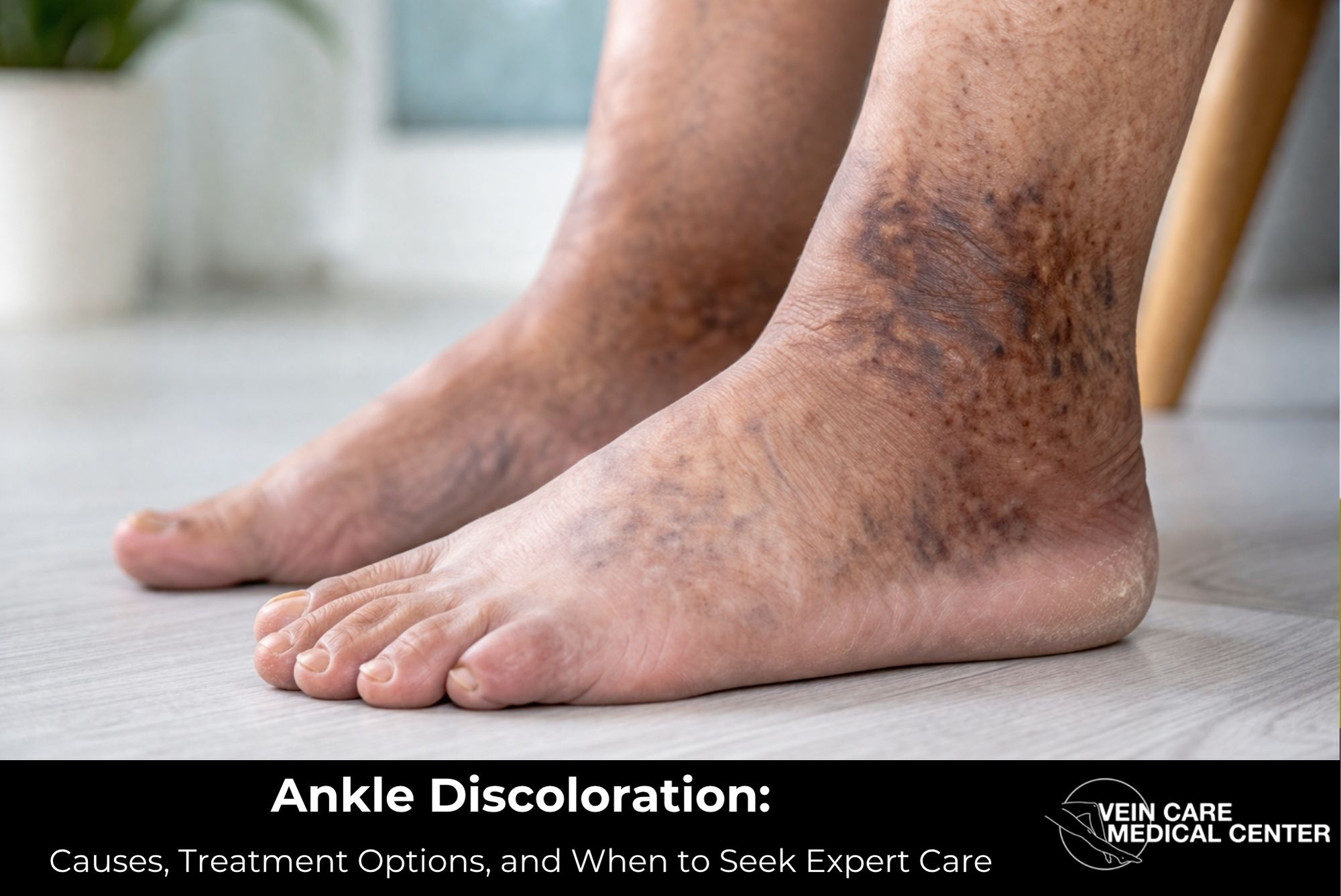
Ankle discoloration is more than a cosmetic concern—it can be a visible warning sign of underlying vein disease or circulation problems. At Vein Care Medical Center, we specialize in diagnosing and treating the root causes of ankle discoloration to restore both your health and confidence.
If you’ve noticed darkening, redness, or purplish tones around your ankles, understanding what’s behind these changes is the first step toward effective treatment.
What Is Ankle Discoloration?
Ankle discoloration refers to changes in skin color around the lower legs and ankles. It often appears as:
- Brown or dark patches
- Reddish or purplish tones
- Yellowish or bruised-looking skin
- Thickened or hardened skin texture
These changes are frequently linked to poor circulation, especially chronic venous insufficiency (CVI)—a condition where veins struggle to return blood from the legs back to the heart.
What Causes Ankle Discoloration?
Several conditions can lead to ankle discoloration, but the most common causes are vein-related.
1. Chronic Venous Insufficiency (CVI)
When vein valves weaken, blood pools in the lower legs. This increases pressure and causes leakage of blood components into surrounding tissue, leading to skin discoloration.
2. Hemosiderin Staining
As red blood cells break down under the skin, they release iron deposits (hemosiderin), creating brown or rust-colored patches.
3. Varicose Veins
Bulging, twisted veins often indicate poor circulation and can contribute to ankle discoloration over time.
4. Venous Stasis Dermatitis
This inflammatory condition causes:
- Redness
- Itching
- Scaling
- Darkened skin
It’s often a progression of untreated vein disease.
5. Lipodermatosclerosis
A more advanced condition where the skin becomes hardened, tight, and discolored due to long-term inflammation.
Why You Shouldn’t Ignore Ankle Discoloration
Ankle discoloration is often progressive, meaning it can worsen without treatment. Left untreated, it may lead to:
- Chronic swelling
- Skin thickening
- Pain or heaviness in the legs
- Open sores (venous ulcers)
- Increased risk of infection
Early diagnosis can prevent these complications and improve outcomes significantly.
How Is Ankle Discoloration Diagnosed?
At Vein Care Medical Center, we use advanced diagnostic tools to identify the underlying cause, including:
- Ultrasound imaging to assess blood flow
- Physical examination of veins and skin
- Review of medical history and symptoms
This comprehensive approach ensures accurate diagnosis and personalized care.
Treatment Options for Ankle Discoloration
Treatment focuses on addressing the underlying vein issue—not just the visible symptoms.
1. Minimally Invasive Vein Treatments
- Endovenous Laser Therapy (EVLT)
- Radiofrequency Ablation (RFA)
- Sclerotherapy
These procedures close malfunctioning veins and redirect blood flow to healthy veins.
2. Compression Therapy
Medical-grade compression stockings help:
- Improve circulation
- Reduce swelling
- Prevent worsening discoloration
3. Lifestyle Modifications
- Regular exercise
- Elevating the legs
- Maintaining a healthy weight
- Avoiding prolonged sitting or standing
4. Skin Care Management
Specialized creams and treatments can help manage irritation and improve skin health.
Can Ankle Discoloration Be Reversed?
In many cases, yes—especially when treated early. While some pigmentation may take time to fade, treating the underlying vein condition can:
- Stop progression
- Improve skin appearance
- Prevent complications
When Should You See a Vein Specialist?
You should seek evaluation if you notice:
- Persistent ankle discoloration
- Swelling in your legs or ankles
- Aching, heaviness, or fatigue in your legs
- Visible varicose or spider veins
- Skin changes or irritation
Early intervention is key to preventing long-term damage.
Frequently Asked Questions (Q&A)
Q: Is ankle discoloration always caused by vein problems?
A: Not always, but vein disease is one of the most common causes. Other conditions like diabetes or skin disorders may also contribute, which is why proper evaluation is important.
Q: Is ankle discoloration dangerous?
A: It can be. While it may start as a cosmetic issue, it often signals underlying circulation problems that can lead to more serious complications if untreated.
Q: Does ankle discoloration go away on its own?
A: Typically no. Without treatment, it often worsens over time. Addressing the root cause is essential.
Q: Are vein treatments painful?
A: Most modern vein treatments are minimally invasive and involve little to no discomfort, with quick recovery times.
Q: How long does it take to see improvement?
A: Many patients notice improvement within weeks, though full skin recovery may take several months depending on severity.
Q: Can I prevent ankle discoloration?
A: Yes—maintaining good circulation through exercise, compression therapy, and early treatment of vein issues can help prevent it.
Take the First Step Toward Healthier Legs
If you’re experiencing ankle discoloration, don’t wait for it to worsen. The experienced team at Vein Care Medical Center is here to provide expert diagnosis and advanced treatment options tailored to your needs.
Contact Vein Care Medical Center
Website: veincaremedicalcenter.com
Request an Appointment: https://veincaremedicalcenter.com/appointments/
Los Angeles Office
Phone: (323) 934-9191
Email: veincare.medicalcenter@gmail.com
Address: 6221 Wilshire Boulevard., Suite 612
Los Angeles, California 90048
Walnut Office
Phone: (323) 934-9191
Email: veincare.medicalcenter@gmail.com
Address: 18710 Amar Rd. Suite A
Walnut, California 91789